How I Turned Old Treasures Into Smart Investments — My Antique Collection Strategy
What if the key to long-term wealth isn’t in stocks or real estate, but hidden in dusty auctions and forgotten estate sales? I started collecting antiques not for profit, but passion. Yet, over time, I discovered a powerful investment strategy beneath the surface. It’s not about luck — it’s about knowledge, timing, and discipline. Let me show you how antique collecting, when done right, can be more than a hobby — it can be a calculated financial move. While markets rise and fall, certain tangible assets remain resilient. Antiques, when selected wisely, appreciate steadily, often outpacing inflation and offering diversification in uncertain economic times. This is not speculation; it is strategy grounded in research, patience, and respect for history.
The Hidden Value in Antiques: Why Old Objects Can Be Future Assets
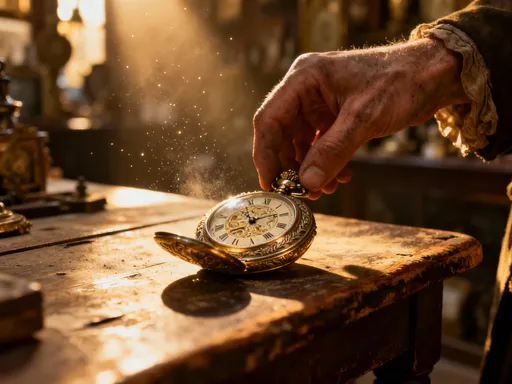
Antique collecting is frequently dismissed as a sentimental pursuit, reserved for those drawn to nostalgia or craftsmanship. But behind the charm of a weathered mahogany chest or a hand-painted porcelain vase lies something more substantial: a physical asset with the potential for long-term appreciation. Unlike stocks, bonds, or digital currencies, antiques are finite. No new supply can be created, and as time passes, fewer pieces remain in good condition. This natural scarcity, combined with cultural significance, gives certain antiques enduring value.
What transforms an old object into a future asset? Three primary factors: craftsmanship, scarcity, and provenance. Items made with exceptional skill — such as 18th-century English furniture, Qing dynasty ceramics, or Art Deco lighting — often command premium prices because their quality cannot be replicated with modern mass production. Scarcity amplifies this effect. A rare edition of a vintage typewriter or a limited-run mid-century modern chair becomes more desirable as fewer examples surface in the market. Provenance — the documented history of ownership — can elevate an item’s worth dramatically. For instance, a desk once owned by a noted historical figure or one displayed in a respected museum may fetch many times its market estimate.
Market dynamics also play a crucial role. Shifts in taste, driven by interior design trends or generational preferences, can suddenly increase demand for specific categories. The resurgence of interest in mid-century modern furniture over the past two decades is a clear example. What was once considered outdated in the 1980s and 1990s now commands high prices at auction. Similarly, global demand from emerging markets, particularly in Asia, has driven up values for European silver, Chinese porcelain, and American folk art. Economic conditions influence pricing as well. During periods of inflation or currency instability, tangible assets like antiques often serve as a hedge, preserving wealth when paper assets falter.
Yet, this market rewards patience. Unlike day trading or short-term investing, antique appreciation unfolds over years, sometimes decades. A piece purchased for $500 at an estate sale may take ten years to double in value. But that slow growth comes with lower volatility. There are no overnight crashes, no flash crashes triggered by algorithmic trading. The antique market moves deliberately, influenced more by connoisseurship than speculation. For the disciplined investor, this offers a rare combination: stability, appreciation, and the pleasure of ownership.
Finding Gems Where Others See Junk: Sourcing with Strategy
One of the most compelling aspects of antique investing is the thrill of discovery — the moment you spot a valuable piece overlooked by others. But finding these hidden gems isn’t about luck; it’s about strategy, preparation, and knowing where to look. The most profitable acquisitions often come not from high-end galleries but from estate sales, auctions, flea markets, and private sellers who may not fully understand what they own. The key is to develop a sourcing plan that maximizes opportunity while minimizing risk.
Estate sales are particularly fertile ground. When families downsize or settle an inheritance, they often liquidate household contents quickly, sometimes pricing items far below market value. Because emotional attachment clouds judgment, sellers may undervalue a grandmother’s antique jewelry or a grandfather’s collection of vintage tools. Attending estate sales early in the day increases your chances of first pick, but arriving later can yield discounts as sellers become eager to clear remaining stock. Building relationships with estate sale organizers can provide advance access or insider knowledge about upcoming sales in affluent neighborhoods.
Auctions, both live and online, offer another powerful channel. Public auctions, especially those held by local auction houses, frequently feature unsorted lots where valuable items are buried among common household goods. Online platforms like auction sites and estate listing services have expanded access, allowing collectors to monitor bidding trends and identify underpriced items. The challenge lies in accurate assessment. Without formal expertise, buyers must rely on research, comparison, and a trained eye. Learning to spot quality — the grain of solid wood, the weight of authentic silver, the signature of a known maker — is essential.
Flea markets and antique fairs provide additional opportunities, though they require greater discernment. Vendors vary widely in knowledge and integrity. Some specialize in authentic antiques, while others deal in reproductions or heavily restored pieces passed off as original. Success here depends on consistent presence, relationship-building, and a willingness to walk away. Regular attendance allows you to recognize repeat sellers, track price changes, and develop a sense of fair market value. Over time, trustworthy dealers may offer you first look at new arrivals or alert you to upcoming sales.
The disciplined collector approaches sourcing with clear criteria. Instead of buying what catches the eye, they ask: Does this align with my collection focus? Is it priced below market value? Can I verify its authenticity? Is it in good condition or restorable at a reasonable cost? These questions form a mental checklist that prevents emotional purchases and keeps the investment strategy intact. Sourcing is not about acquiring everything old — it’s about selecting the right things at the right price.
The Real ROI of Antiques: Beyond Aesthetic Appeal
Many people buy antiques for their beauty, charm, or sentimental value. The smart investor, however, evaluates each purchase through the lens of return on investment. While antiques do not generate income like rental property or dividend-paying stocks, their value grows through appreciation driven by rarity, demand, and condition. Over time, well-chosen pieces can deliver strong financial returns, often with lower correlation to traditional markets.
Appreciation in the antique market operates differently than in financial markets. There are no quarterly reports or interest payments. Instead, value increases when demand outpaces supply. A 19th-century American quilt, for example, may double in value over 15 years if it is rare, well-preserved, and tied to a significant historical period. Similarly, a set of original Frank Lloyd Wright-designed furniture, though expensive to acquire, has demonstrated consistent appreciation due to its architectural importance and limited availability.
Different categories of antiques perform differently. Furniture, particularly from recognized periods like Georgian, Federal, or Art Nouveau, tends to hold value well, especially if made from solid wood and in original condition. Ceramics, including porcelain from Meissen, Sevres, or Jingdezhen, have strong international demand and can appreciate significantly when provenance is clear. Textiles, such as antique lace, tapestries, or Navajo rugs, are more niche but can yield high returns when sourced carefully. Silver, clocks, books, and decorative arts each have their own market cycles, influenced by collector trends and global demand.
Restoration can enhance value, but only when done properly. A poorly restored piece — one with mismatched wood, over-painted surfaces, or non-original parts — may lose more value than it gains. Professional conservation, using historically accurate materials and techniques, preserves authenticity and increases marketability. Documentation also plays a critical role. Keeping records of purchase price, provenance, appraisals, and restoration work builds a paper trail that reassures future buyers and supports higher valuations.
Presentation matters too. A well-photographed, accurately described item on a reputable sales platform will attract more interest and potentially higher bids. Lighting, background, and detail shots help buyers assess condition remotely. For high-value items, including a certificate of authenticity or expert appraisal can significantly boost confidence and price. The combination of proper care, documentation, and presentation turns a simple acquisition into a well-prepared asset ready for future sale.
Risk Control: Avoiding the Traps of Emotional Buying
One of the greatest risks in antique investing is not market volatility — it is emotional decision-making. The allure of a beautifully carved armoire or a delicate porcelain teacup can override rational judgment, leading to overpayment or impulsive purchases. The collector who buys based on sentiment rather than strategy often ends up with a room full of objects that bring joy but little financial return. To avoid this, it is essential to treat antique collecting as a disciplined financial activity, not just a passion project.
Setting a clear budget is the first line of defense. Determine in advance how much you are willing to spend annually or per acquisition, and stick to it. This prevents overspending during moments of excitement, especially at auctions where bidding wars can drive prices beyond reason. Equally important is defining your collection goals. Are you focused on a specific era, region, or category? A focused strategy reduces the temptation to buy unrelated items simply because they seem interesting at the moment.
Another key risk is liquidity. Unlike stocks or bonds, antiques cannot be sold instantly. Finding the right buyer may take months or even years, particularly for specialized items. This illiquidity means that antique investments should be viewed as long-term holdings, not emergency funds. Investors must be prepared to hold assets through market downturns and avoid needing to sell under pressure.
Storage and insurance are often overlooked costs. Antiques require proper environmental conditions — stable temperature, low humidity, and protection from sunlight — to prevent deterioration. Investing in climate-controlled storage or museum-quality display cases may be necessary for high-value pieces. Insurance is equally critical. Standard homeowner’s policies may not cover the full appraised value of a collection, so specialized fine art or collectibles insurance is often required. These costs must be factored into the overall return calculation.
Market fluctuations also pose a risk. While antiques are generally stable, demand can shift. A style that is fashionable today may fall out of favor in a decade. That is why diversification within the antique category is wise. Instead of putting all resources into one type of furniture, consider spreading investments across ceramics, textiles, and decorative arts. This reduces exposure to any single market trend and increases the chances of long-term growth.
The Power of Knowledge: Research as Your Best Tool
In the world of antique investing, information is the most valuable currency. The difference between a profitable acquisition and a costly mistake often comes down to research. Knowing the maker’s mark on a silver teapot, recognizing the characteristics of genuine 18th-century walnut, or understanding the historical context of a Victorian-era painting can mean the difference between buying a treasure and buying a reproduction.
Provenance research is one of the most powerful tools available. Documents such as original receipts, ownership records, exhibition history, or family letters can significantly enhance an item’s value. Even a photograph of the piece in an old home can provide evidence of age and authenticity. Public archives, historical societies, and genealogical databases can help trace an object’s past. For high-value items, hiring a professional researcher or appraiser may be a worthwhile investment.
Auction records are another essential resource. Major auction houses publish detailed catalogs and results, which can be used to track the sale prices of similar items over time. By studying these records, collectors can establish a baseline for fair market value and identify undervalued opportunities. Online databases and price guides, while not always accurate, provide useful starting points for comparison.
Museum collections and academic publications also serve as valuable references. Many museums offer free online access to their collections, allowing collectors to study authentic examples of specific styles, periods, or makers. Scholarly books and journals provide in-depth analysis of craftsmanship, materials, and historical significance. Building a personal library of reference materials pays dividends over time, increasing confidence in evaluation and reducing reliance on dealers or appraisers.
Over time, consistent research builds expertise. This knowledge not only protects against fraud but also reveals emerging trends before they become widely recognized. A collector who notices increasing interest in Scandinavian mid-century design, for example, may acquire pieces early at lower prices, positioning themselves for future gains. In this way, research becomes a strategic advantage, transforming collecting from a passive hobby into an informed investment practice.
Timing the Market: When to Buy, Hold, or Sell
Timing is one of the most challenging aspects of antique investing. Unlike stock markets, which provide real-time data and price alerts, the antique market moves slowly and often without clear signals. There are no daily closing prices or volume charts. Instead, investors must rely on experience, market observation, and patience to determine the right moment to buy, hold, or sell.
Buying opportunities often arise during economic downturns or periods of social change. When people downsize, relocate, or face financial pressure, they may sell antiques at reduced prices. These moments, though difficult for the seller, can be ideal for the prepared buyer. Similarly, generational shifts — such as baby boomers passing down family heirlooms — create waves of inventory that can be acquired at estate sales or auctions before values rise again.
Holding is usually the default strategy. Most antiques appreciate gradually, so long-term ownership is key. The ideal holding period varies by category but often ranges from 10 to 20 years. During this time, the investor’s role is to preserve condition, maintain documentation, and stay informed about market trends. Holding also allows time for cultural recognition to grow — a piece once considered ordinary may later be recognized as historically significant.
Selling requires careful consideration. The best time to sell is when demand is high, condition is excellent, and documentation is complete. Major auction seasons, such as spring and fall in key markets, often attract the most buyers and achieve the highest prices. Economic stability and strong consumer confidence also support higher valuations. However, emotional detachment is crucial. Letting go of a beloved piece can be difficult, but holding onto it too long may mean missing a peak market window.
Knowing when not to sell is equally important. If the market for a particular category is weak, or if the piece requires restoration, it may be wiser to wait. Forcing a sale in unfavorable conditions often results in financial loss. The disciplined investor waits for the right moment, just as they waited for the right purchase.
Building a Legacy: Wealth, Culture, and the Future of Collecting
Antique investing is not solely about financial gain. At its best, it is a practice that blends wealth creation with cultural preservation. Each piece tells a story — of craftsmanship, of daily life, of historical moments now passed. A well-curated collection becomes more than a portfolio; it becomes a living archive, a bridge between generations. The value extends beyond appraisals and auction results to include education, inspiration, and family heritage.
For many collectors, the ultimate goal is to pass the collection to the next generation. This requires thoughtful estate planning. Clearly documenting ownership, appraisals, and provenance ensures a smooth transfer and helps heirs understand the significance of each item. Including instructions for care and display can preserve the collection’s integrity. In some cases, donating part of a collection to a museum or cultural institution may provide tax benefits while ensuring public access and long-term preservation.
Insurance and legal structures also play a role in legacy planning. Establishing a trust or foundation can protect the collection from estate taxes and prevent fragmentation. Professional advisors familiar with collectibles can help design a plan that balances financial efficiency with personal values. The aim is not just to preserve wealth, but to preserve meaning.
Ultimately, the most successful antique investors are those who balance emotion with discipline. They buy with knowledge, hold with patience, and sell with purpose. They understand that true value is not measured in dollars alone, but in the stories preserved, the history honored, and the legacy built. In a world of fleeting trends and digital impermanence, antiques offer something rare: enduring worth, both financial and cultural.