You Won’t Believe What I Found While Shopping in Sicily
Shopping in Sicily isn’t just about buying souvenirs—it’s a deep dive into centuries of art, culture, and craftsmanship. I went looking for gifts but ended up discovering vibrant markets, family-run studios, and hidden boutiques where every object tells a story. From hand-painted ceramics to intricate lace, the island’s creative soul is alive in every detail. This is shopping with meaning, rooted in tradition and passion. Each purchase becomes a quiet act of preservation, a way to carry home not just an item, but a piece of history shaped by fire, sea, and generations of skilled hands. What began as a simple errand turned into a journey through identity, resilience, and beauty.
The Heartbeat of Sicilian Craft: Where Art Meets Daily Life
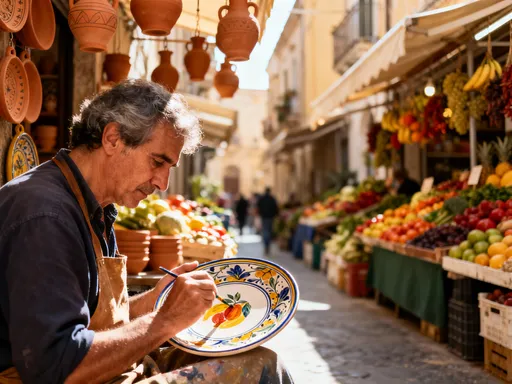
Sicily’s artisanal traditions are not museum exhibits—they are living practices woven into the rhythm of everyday life. In towns like Caltagirone and Santo Stefano di Camastra, craftsmanship is not merely a trade but a heritage passed from parent to child, often within the same workshop for generations. Ceramics, in particular, stand as one of the island’s most iconic art forms, with Caltagirone renowned for its terracotta pottery and vividly painted tiles. The town’s famous Scalinata di Santa Maria del Monte, a grand staircase adorned with hand-glazed ceramic steps, is itself a testament to the deep integration of art and environment. Each tile reflects local flora, zodiac signs, or historical motifs, turning public space into a canvas of cultural memory.
What makes Sicilian ceramics so distinctive is the fusion of Arab, Norman, and Baroque influences that have shaped the island’s history. The intricate geometric patterns seen in many pieces echo the island’s Moorish past, while the bold use of cobalt blue, emerald green, and sunflower yellow speaks to its Mediterranean light. Artisans still use traditional wood-fired kilns, some of which have been in continuous operation for over a century. These ovens require careful temperature control and days of firing, a process that demands patience and deep understanding. Visitors to local workshops often witness potters shaping clay on foot-powered wheels, their movements rhythmic and precise, as if guided by instinct rather than instruction.
But ceramics are only one thread in Sicily’s rich textile of craftsmanship. In the mountainous interior, woodcarvers continue to produce religious statues and ornate furniture using techniques unchanged for centuries. In coastal villages, fishermen’s families preserve the art of net-making and boat decoration, blending utility with symbolic design. Textile artisans in towns like Prizzi still weave wool on looms, creating blankets and garments that reflect seasonal cycles and rural traditions. These crafts are not performed for tourists alone—they serve local festivals, religious processions, and domestic life, ensuring that tradition remains functional, not merely decorative.
Supporting these artisans does more than provide a unique souvenir; it sustains entire communities. Many workshops operate on a small scale, with families managing every step from material sourcing to final sale. When travelers choose authentic pieces over mass-produced imitations, they contribute directly to the survival of these traditions. Some cooperatives, such as those in Santo Stefano di Camastra, have revitalized their economies by promoting artisan tourism, offering hands-on workshops where visitors can try their hand at painting ceramic tiles or shaping clay. This interaction fosters mutual respect—artisans gain recognition and income, while travelers gain insight and connection. In this exchange, shopping becomes a form of cultural dialogue, quiet but profound.
Palermo’s Markets: A Sensory Journey Through Culture and Commerce
To walk through Palermo’s historic markets is to step into the pulsing heart of Sicilian life. Vucciria, Ballarò, and Capo are not just places to buy food or trinkets—they are open-air theaters of human interaction, where barter, banter, and tradition unfold in real time. Each market has its own character, shaped by centuries of trade, migration, and local identity. The air is thick with the scent of fried panelle, ripe figs, and salt-dried anchovies, while the sounds of vendors calling out prices, friends greeting one another, and the occasional street musician create a symphony of urban vitality. These markets are where Sicily’s multicultural roots—Phoenician, Arab, Norman, and Spanish—are most vividly alive.
Ballarò, one of the oldest and most authentic, stretches through the Kalsa district, its narrow streets lined with stalls piled high with seasonal produce, spices in burlap sacks, and wheels of aged pecorino. Amid the food vendors, small artisans sell hand-woven baskets made from reeds gathered along the coast, their patterns echoing North African influences. Jewelry makers display filigree silver pieces, often shaped into coral or citrus motifs, symbols of protection and abundance. These items are not crafted solely for sale—they reflect personal beliefs and family customs, passed down through generations of Sicilian women who have long used jewelry as both adornment and talisman.
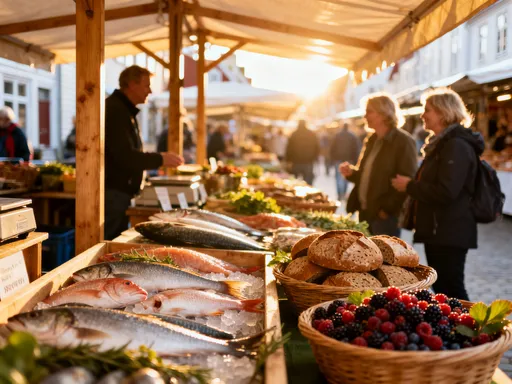
Vucciria, though more tourist-facing today, still retains flashes of its bohemian spirit. Once a hub for artists and performers, it now hosts a mix of food stalls, vintage clothing vendors, and painters selling small canvases of city scenes. At dawn, fishermen unload the night’s catch directly onto marble slabs, their glistening swordfish and sardines drawing chefs from nearby restaurants. By mid-morning, the focus shifts to prepared foods—arancini stuffed with ragù, caponata served in paper cones, and cannoli so fresh the pastry cracks under the pressure of ricotta filling. These edible offerings are as much a part of the shopping experience as any handmade object, linking taste to memory and place.
What makes these markets truly special is their role as social anchors. Grandmothers haggle over eggplant prices while grandchildren chase chickens in pens; neighbors catch up between purchases, exchanging news and recipes. For the visitor, this is not a curated performance but a genuine slice of daily life. Shopping here requires engagement—learning a few Italian phrases, understanding the rhythm of bargaining, and appreciating that a purchase often comes with a story. A vendor might explain how her mother taught her to select the best capers from Pantelleria, or how the lemons on display come from a grove that has been in her family for over a hundred years. These moments transform a simple transaction into a human connection, deepening the traveler’s sense of place.
Syracuse and Ortigia: Hidden Boutiques and Baroque Inspiration
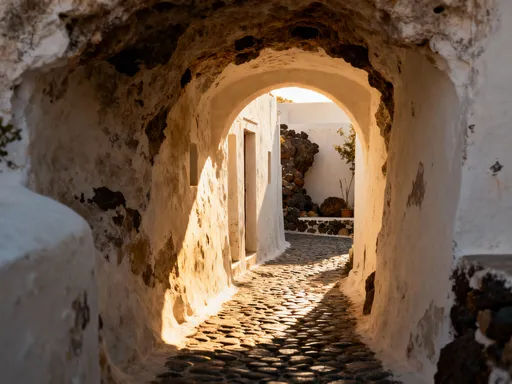
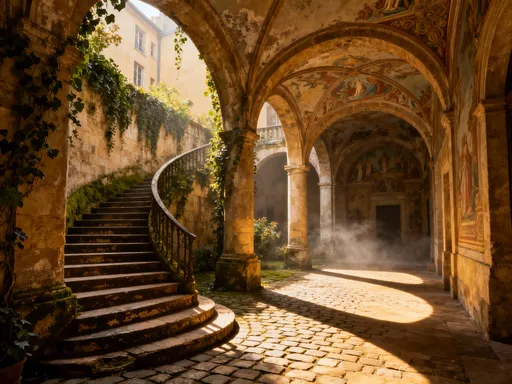
The island of Ortigia, the historic center of Syracuse, feels like a place suspended between epochs. Its honey-colored limestone buildings glow in the Mediterranean sun, their baroque facades adorned with sculpted saints and floral motifs. Wandering its cobblestone alleys, one discovers a network of intimate boutiques that blend local artistry with contemporary elegance. Unlike the bustling energy of Palermo’s markets, Ortigia offers a more refined shopping experience—one rooted in curation, history, and sensory delight. Here, commerce is not separate from culture; it is an extension of it, shaped by the island’s Greek origins, Roman occupation, and Sicilian soul.
Many of Ortigia’s shops are housed in restored palazzi, their interiors combining antique furnishings with minimalist displays. One boutique might specialize in ceramics from nearby Noto, featuring soft pastel glazes and delicate floral patterns inspired by 18th-century designs. Another offers perfumes crafted from local botanicals—citrus from the Plemmirio coast, wild fennel from the hills, and Mediterranean herbs like rosemary and thyme. These fragrances are not mass-produced; they are distilled in small batches, often by perfumers who study both ancient techniques and modern aromatherapy. The result is a scent profile that captures the essence of the island—sun-warmed, slightly salty, and deeply aromatic.
Jewelry in Ortigia often draws from the city’s rich archaeological heritage. Designers incorporate motifs from Greek temples, Roman mosaics, and Byzantine icons, reinterpreting them in silver, gold, and semi-precious stones. A pendant might echo the shape of a Gorgon’s mask from the Temple of Athena, while a bracelet could mimic the wave patterns found in ancient floor tiles. These pieces are not mere souvenirs; they are wearable art, each carrying a fragment of history. Some artisans collaborate with local museums, creating collections that support cultural preservation efforts, ensuring that the past continues to inform the present.
What sets Ortigia apart is the harmony between old and new. A 17th-century fountain still feeds a public well, while a nearby café serves artisanal gelato in flavors like prickly pear and jasmine. A shop selling handmade paper might be steps away from a 5th-century synagogue, its entrance marked by a simple stone arch. This coexistence of time periods creates a dreamlike atmosphere, where every turn reveals a new layer of meaning. For the thoughtful traveler, shopping here becomes a form of exploration—an opportunity to collect not just objects, but impressions, scents, and stories that linger long after departure.
Modica’s Chocolate: Edible Art Steeped in History
In the southeastern town of Modica, chocolate is not a confection—it is a cultural artifact. Recognized by UNESCO as part of Italy’s intangible cultural heritage, Modica’s chocolate-making tradition dates back to the 17th century, when Spanish nobles introduced cacao to the region. Unlike modern chocolate, which is melted and tempered, Modica’s artisans use a cold-processing method called *granita*, grinding sugar and cocoa beans together without liquefying the mixture. The result is a crumbly, textured bar that melts slowly on the tongue, releasing intense, almost spicy flavors. This technique, preserved for over 300 years, allows the natural bitterness of the cacao to shine, balanced by the crystalline sweetness of raw sugar.
Walking through Modica’s historic center, one encounters small shops with glass cases filled with chocolate bars in vibrant wrappers—deep reds, golds, and blues that reflect the town’s baroque aesthetic. Inside, the air is thick with the scent of roasting beans. Many producers still use hand-cranked mills to grind the ingredients, their workshops tucked into ancient stone buildings with vaulted ceilings. Some families have been making chocolate for generations, guarding their recipes like heirlooms. Visitors can watch the process firsthand, seeing how the mixture is poured into molds, cooled, and broken into irregular slabs that resemble antique tablets.
What makes Modica’s chocolate even more remarkable is its creative evolution. While traditional flavors like cinnamon and vanilla remain popular, modern artisans have introduced innovative infusions—chili pepper from the nearby Hyblaean Mountains, candied orange peel, jasmine, and even sea salt. These additions are not gimmicks; they reflect the island’s agricultural abundance and culinary daring. A bar infused with chili carries a warmth that echoes Sicily’s fiery temperament, while one with lemon zest captures the brightness of its coastal orchards. Some chocolatiers even collaborate with local winemakers, creating pairings with Nero d’Avola or Moscato di Noto, further embedding chocolate into the region’s gastronomic identity.
Purchasing Modica chocolate is more than a treat—it is an act of cultural preservation. Small producers face competition from industrial brands that mimic the style but lack the authenticity. By choosing chocolate from family-run shops, travelers support a fragile tradition that relies on manual labor, high-quality ingredients, and deep knowledge. Many shops offer tastings, allowing visitors to compare textures and flavors, learning to distinguish real Modica chocolate by its grainy consistency and layered taste. In this way, even a simple purchase becomes an education, a moment of connection between maker, consumer, and history.
Trapani’s Lace and Salt: Two Traditions, One Coastal Town
On Sicily’s western coast, the town of Trapani cradles two ancient crafts that could not seem more different—one delicate and intricate, the other elemental and enduring. *Merletto di Trapani*, or Trapani lace, is a form of bobbin lace so fine it appears almost weightless, its patterns inspired by seashells, coral, and maritime stars. Meanwhile, the salt flats of Trapani, known as *saline*, have been harvesting sea salt since Phoenician times, using a system of evaporation ponds that stretch along the coastline. Together, these traditions represent the duality of Sicilian life—artistry and survival, beauty and necessity, both shaped by the sea.
Trapani lace is the product of meticulous handwork, often done by women seated in sunlit rooms, their fingers moving swiftly among dozens of bobbins. The craft was introduced in the 16th century and flourished in the 19th, when it was exported across Europe. Today, only a handful of artisans continue the tradition, teaching it through workshops and cultural associations. The lace is used in bridal veils, altar cloths, and decorative panels, each piece taking weeks or even months to complete. The patterns are not arbitrary—they often carry symbolic meanings, with shells representing pilgrimage and waves symbolizing life’s journey. To watch a lace-maker at work is to witness patience made visible, a quiet defiance of modern speed and mass production.
Just a few kilometers away, the salt flats operate on a different rhythm—one dictated by tides, wind, and sunlight. The saline system consists of a series of shallow ponds where seawater is channeled and slowly evaporated, leaving behind crystalline salt. This method, unchanged for millennia, produces a coarse, mineral-rich salt that is prized in Sicilian kitchens. Harvesting is done by hand in summer, using wooden rakes to gather the salt from the ponds. The work is physically demanding, but the result is a product of exceptional purity and flavor. Some of this salt is even used in natural cosmetics, such as exfoliating scrubs and bath salts, extending its value beyond the kitchen.
Both lace and salt are deeply tied to Trapani’s identity. The town’s annual festivals celebrate both crafts, with lace displays in churches and salt tastings in public squares. Local schools sometimes include lace-making in their curriculum, ensuring that younger generations understand its value. For the visitor, experiencing both traditions offers a fuller picture of Sicilian resilience—how beauty and sustenance can arise from the same environment. A shop in Trapani’s old town might sell a hand-embroidered handkerchief beside a jar of sea salt, each item a testament to human ingenuity and the enduring power of tradition.
How to Shop Mindfully: Supporting Authentic Sicilian Creators
As tourism grows in Sicily, so does the risk of cultural dilution. Mass-produced ceramics from Asia, machine-made lace, and generic souvenirs labeled “Made in Italy” can be found in many gift shops, often priced lower than authentic pieces. For the conscientious traveler, distinguishing between genuine craftsmanship and imitation is essential. Mindful shopping means looking beyond price and appearance to understand the story behind an object. It means seeking out artisans, cooperatives, and family-run businesses that prioritize quality, tradition, and sustainability over convenience and profit.
One of the best ways to ensure authenticity is to visit workshops and studios directly. In Caltagirone, for example, many ceramicists welcome visitors to observe their process, from shaping the clay to applying the final glaze. In Modica, chocolatiers often allow guests to sample different varieties, explaining the origin of their beans and the nuances of their technique. These interactions not only verify authenticity but also enrich the experience, turning a purchase into a memory. Labels such as “DOP” (Protected Designation of Origin) or membership in artisan associations can also serve as indicators of quality, though personal conversation with the maker remains the most reliable guide.
Local fairs and markets, especially those held during religious festivals or harvest seasons, are another excellent venue for finding authentic goods. These events often feature artisans from surrounding villages, offering a diverse range of products while supporting the broader regional economy. Buying a handwoven basket at the Feast of Saint Rosalia in Palermo, for instance, supports not just the weaver but the reed harvesters and dyers who supplied the materials. Such purchases contribute to a sustainable ecosystem of craftsmanship, where every link in the chain is valued.
Mindful shopping also involves respectful engagement. Bargaining is not customary in most Sicilian artisan shops, especially when prices reflect fair wages and material costs. Instead, expressing genuine interest—asking about the process, the tools, or the history—can be more meaningful than any discount. Many artisans appreciate when visitors take the time to understand their work, often sharing personal stories or offering small gifts, like a sample of chocolate or a postcard of their workshop. In these moments, the transaction transcends commerce, becoming a gesture of mutual respect.
Beyond the Purchase: Why These Experiences Stay With You
The most lasting souvenirs from Sicily are not the objects themselves, but the memories of how they were found. It is the warmth of a potter’s hands as she demonstrates a brushstroke, the laughter shared over a clumsy attempt at lace-making, the surprise of tasting chocolate so intense it brings tears to the eyes. These moments linger because they are rooted in presence—eye contact, shared silence, the exchange of knowledge. They remind us that travel is not just about seeing, but about connecting.
When you hold a ceramic plate from Caltagirone, you are not just holding dinnerware; you are holding centuries of fire, soil, and imagination. When you wear a piece of jewelry from Ortigia, you carry a fragment of Greek mythology reimagined through Sicilian eyes. When you sprinkle Trapani salt on your food at home, you invoke the wind and sun of the Mediterranean coast. These items become vessels of memory, transforming everyday rituals into acts of remembrance.
Shopping in Sicily, at its best, is not consumption—it is participation. It is a way to honor the people who keep ancient traditions alive, often in the face of economic hardship and cultural erosion. It is a recognition that beauty, skill, and meaning still have a place in a world that often values speed and scale over depth and care. For the 30- to 55-year-old woman who values family, heritage, and authenticity, these experiences resonate deeply. They speak to a desire to pass down not just objects, but values—to teach children about craftsmanship, to share stories at the dinner table, to live with intention.
In the end, what you bring home from Sicily is not just what fits in a suitcase. It is the feeling of standing in a sunlit workshop, watching hands shaped by time create something timeless. It is the taste of chocolate that tastes like history. It is the knowledge that your choices matter—that by seeking out the real, the handmade, the meaningful, you help ensure that these traditions do not fade. Sicily does not give up its treasures easily, but for those who look with care and heart, the rewards are immeasurable.