You Won’t Believe What This Caribbean Capital Hides in Plain Sight
Georgetown, Guyana isn’t on every traveler’s radar—but it should be. Far from the typical island resorts, this vibrant coastal capital pulses with colonial charm, colorful wooden architecture, and a culture shaped by Indigenous, African, Indian, and Caribbean influences. I went expecting quiet streets and old buildings. What I found was mind-blowing: street art that tells national stories, galleries alive with local talent, and traditions preserved in music, food, and festival. This is culture in motion—not staged for tourists, but lived every day.
First Impressions: A City That Defies Expectations
Arriving in Georgetown by ferry from the East Bank or by air through Cheddi Jagan International Airport, visitors are met with a skyline that defies Caribbean stereotypes. There are no towering hotels or neon-lit promenades. Instead, the city unfolds in low-rise elegance, where green canopies of royal palms and tamarind trees drape over wide, quiet avenues. The air carries the scent of salt from the Atlantic and the faint sweetness of blooming frangipani. What stands out immediately is the harmony between nature and urban life—parks woven into neighborhoods, gardens spilling over wrought-iron fences, and a sense of space that feels rare in a capital city.
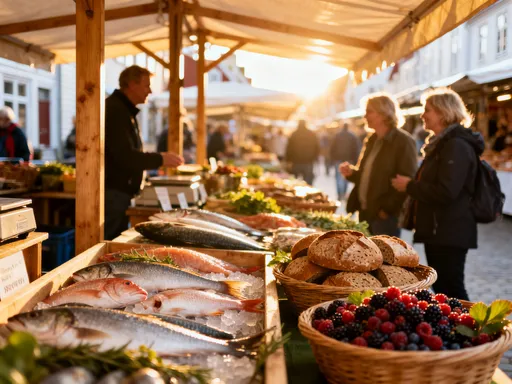
At the heart of downtown lies Stabroek Market, an enduring symbol of Georgetown’s resilience and rhythm. Its massive iron-and-glass canopy, erected in the 1880s by a British foundry, rises like a cathedral of commerce. Inside, the market buzzes with energy: vendors call out prices for fresh cassava, golden-brown bakes, and handwoven baskets. The sounds—haggling, laughter, the occasional rooster crowing from a coop—create a symphony of daily life. This is not a curated experience for tourists; it’s where Guyanese mothers buy provisions, where elders exchange news, and where culture flows as freely as the Demerara River nearby.
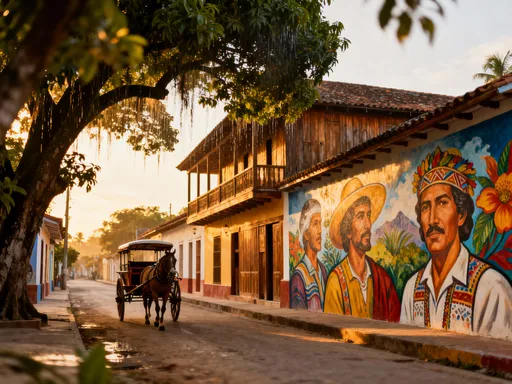
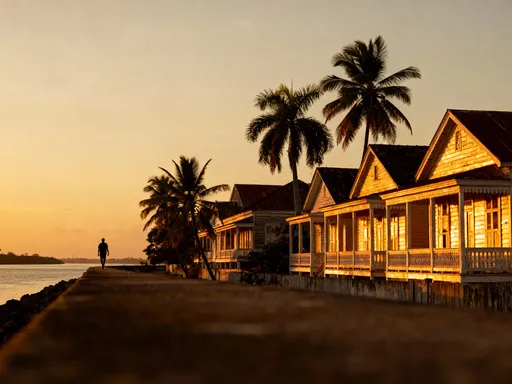
One of the most striking contrasts in Georgetown is the seamless coexistence of old and new. Horse-drawn carts, known locally as “tally carts,” still clip-clop down brick-paved lanes, delivering goods just as they did a century ago. Yet they share the road with modern sedans and electric scooters. Creole-style wooden cottages with gingerbread trim stand beside colonial-era government buildings, their verandas shaded by louvered windows. The city does not erase its past; it layers it. Every corner tells a story of adaptation, survival, and quiet pride. Unlike many Caribbean capitals that have traded heritage for modernity, Georgetown holds onto its identity with grace.
Architectural Soul: Where History Stands Tall
Georgetown’s architectural landscape is unlike any other in the Caribbean. Over 80 percent of its historic buildings are constructed entirely of wood, many dating back to the 19th century. These structures, built from durable greenheart and purpleheart timber sourced from Guyana’s vast rainforests, were designed to withstand the region’s high humidity and frequent flooding. Their raised foundations, wide verandas, and steeply pitched roofs are not merely aesthetic choices—they are practical responses to the environment, refined over generations.
Among the most iconic is St. George’s Cathedral, recognized as the tallest wooden church in the world. Soaring 43 meters into the sky, its spire is a landmark visible from much of the city. Constructed in 1892 using English oak and local hardwoods, the cathedral is a marvel of engineering and craftsmanship. Inside, sunlight filters through stained-glass windows depicting biblical scenes with Caribbean faces, a subtle but powerful affirmation of cultural ownership. Services here are not just religious gatherings—they are community events where hymns blend with Creole melodies, and generations gather under a roof that has witnessed over a century of worship.
Equally significant is the Parliament Building, a neoclassical structure with grand columns and a central dome. Originally built as a colonial administrative center, it now houses Guyana’s legislative body, symbolizing the nation’s journey from colony to republic. The building’s preservation is a point of national pride, maintained through meticulous restoration efforts led by local architects and historians. Other notable sites include the Guyana National Museum, once a Dutch and later British colonial office, and the President’s House, a bright red wooden mansion with white trim that resembles a grand plantation home—though it was always a seat of governance.
These buildings are more than relics; they are living documents of Guyana’s layered history. The Dutch laid the city’s grid system and drainage canals, the British introduced Georgian design, and enslaved Africans and indentured laborers from India built them with their own hands. Today, preservation societies like the National Trust of Guyana work to protect these structures from decay and urban development. Their efforts are not about nostalgia—they are about honoring the resilience of a people who shaped a city from timber, sweat, and vision.
Street Art as Storytelling: Murals With Meaning
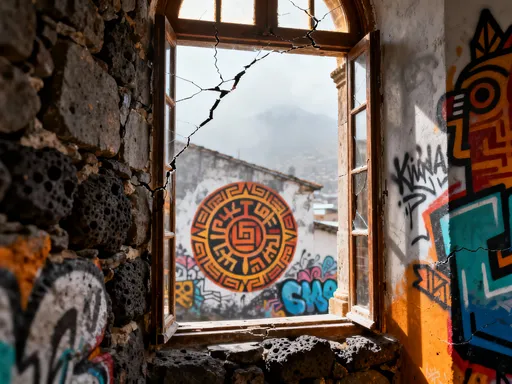
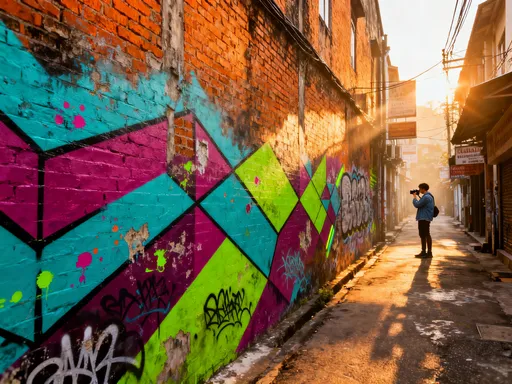
In recent years, Georgetown has emerged as an unexpected hub for public art. Across neighborhoods like Kitty, Thomas Lands, and East Bank Demerara, vibrant murals have transformed blank walls into open-air galleries. These are not random graffiti tags or decorative embellishments—they are deliberate acts of storytelling. Each mural carries a message: a tribute to national heroes, a call for environmental protection, or a celebration of cultural unity.
One striking example is the mural of Cuffy, the leader of the 1763 Berbice slave revolt, painted on a community center wall in Werk-en-Rust. His determined gaze and raised fist serve as a daily reminder of resistance and courage. Another mural in Sophia depicts a child planting a sapling, surrounded by endangered species like the harpy eagle and giant river otter—part of a broader campaign to raise awareness about deforestation and biodiversity loss. These artworks are often created in collaboration with schools, NGOs, and local artists, turning public spaces into classrooms without walls.
The artists behind these works are mostly young Guyanese, trained at institutions like the University of Guyana’s Department of Creative Arts. Many speak of art as a form of healing and empowerment. “We grew up hearing stories our grandparents wouldn’t put in textbooks,” said one muralist, who goes by the name Kofi. “Now we’re putting them on the walls where everyone can see.” The city government has supported this movement by designating certain zones for legal murals and organizing annual street art festivals.
Walking through these neighborhoods, one realizes that Georgetown’s street art is not about rebellion—it’s about reclamation. It reclaims forgotten histories, reclaims public space, and reclaims the narrative of who Guyana is. For travelers, these murals offer a deeper entry point into the culture than any guidebook could provide. They invite questions, spark conversations, and connect visitors to the heartbeat of the community.
Galleries & Creativity: Inside Guyana’s Artistic Pulse
Beyond the streets, Georgetown’s artistic spirit thrives in dedicated cultural spaces. The Walter Roth Museum of Anthropology, though modest in size, houses an extraordinary collection of Indigenous artifacts—basketry, ceremonial masks, tools, and textiles—many collected during early 20th-century ethnographic expeditions. The museum’s mission is not just preservation but education, with exhibits that explain the spiritual and practical significance of each object. Interactive panels, often in both English and Indigenous languages, allow visitors to hear traditional songs and learn about rainforest medicine.
The National Art Gallery, located in a restored 19th-century building on Homestretch Avenue, is another cornerstone of the city’s cultural life. Its rotating exhibitions feature works by Afro-Guyanese, Indo-Guyanese, and Indigenous artists, reflecting the nation’s multicultural fabric. One recent exhibition, “Roots and Rhythms,” showcased paintings inspired by folk tales, religious festivals, and rural life. Sculptures made from recycled materials—old tin, driftwood, and discarded machinery—spoke to both creativity and environmental consciousness.
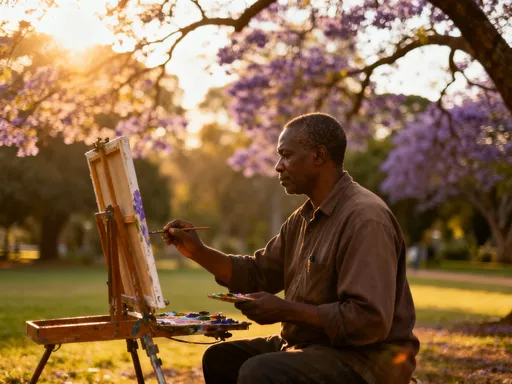
Conversations with local artists reveal a deep connection between creativity and identity. Many describe their work as a response to historical erasure or social challenges. “Our stories were never centered,” said Leila Ramnarine, a mixed-media artist whose pieces explore Indo-Guyanese women’s roles in society. “Art lets me rewrite the narrative.” Others, like sculptor Winston Struik, draw inspiration from the natural world, carving abstract forms from hardwoods that echo the curves of rivers and tree roots.
What unites these artists is a commitment to authenticity. They do not create for international markets or trends; they create for their communities. Art sales, when they happen, often support local projects—buying school supplies, funding youth workshops, or restoring community centers. For travelers, visiting these galleries is not just about viewing art—it’s about witnessing a culture that values expression as a form of resistance, resilience, and renewal.
Rhythm & Flavor: Culture in Sound and Spice
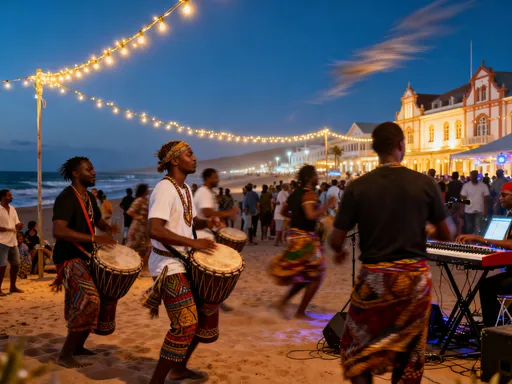
Georgetown’s culture cannot be fully understood through sight alone—it must be heard and tasted. Music flows through the city like an invisible thread, connecting homes, markets, and street corners. On weekends, the rhythms of mento—a traditional Afro-Caribbean folk style featuring banjo, drums, and maracas—drift from backyard parties. In East Bank villages, chutney music, a fusion of Indian folk and Caribbean beats, blares from sound systems during weddings and religious festivals. Reggae and soca also have strong followings, their lyrics often touching on social justice, love, and national pride.
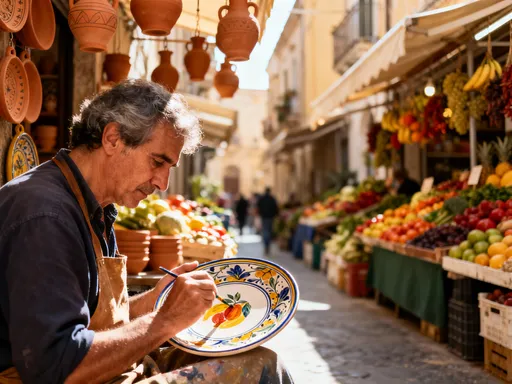
No visit is complete without experiencing Guyanese cuisine, a true reflection of the country’s diversity. In local eateries called “cook shops,” visitors can sample dishes like pepperpot, a rich, slow-cooked stew made with cassareep (a sauce from cassava root), meat, and spices. It simmers for days, often prepared in large quantities for holidays and family gatherings. Roti, a flatbread of Indian origin, is stuffed with curried chickpeas, potatoes, or meat and served with chutney. At breakfast, bakes—fried dough often paired with salted fish—are a staple.
These flavors are more than just food—they are acts of cultural preservation. Recipes are passed down orally, often with variations unique to each family. Cooking is a communal activity, especially during festivals when neighbors gather to prepare large meals together. In Georgetown’s public markets, vendors proudly display ingredients like turmeric, cinnamon, and hot peppers, many grown in backyard gardens. For travelers, sharing a meal is one of the most intimate ways to connect with locals. It opens doors to conversation, laughter, and stories that never make it into travel brochures.
Festivals: When the City Comes Alive
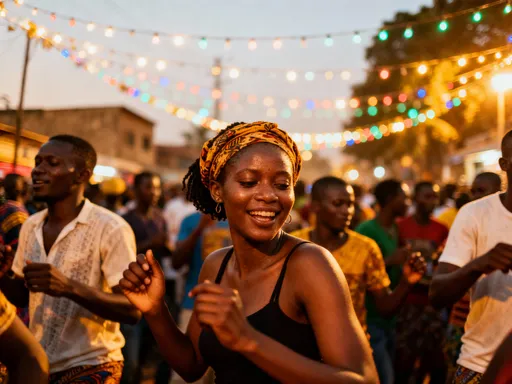
Georgetown’s calendar is marked by vibrant festivals that transform the city into a stage of celebration. The most prominent is Mashramani, held every February 23 to commemorate Guyana’s transition to a republic in 1970. The name, derived from an Indigenous word meaning “celebration after hard work,” reflects the spirit of the event. Streets fill with costumed revelers dancing to steelpan, brass bands, and soca music. Floats adorned with flowers and mirrors roll through the city, while children wave flags and elders smile from shaded verandas.
Equally significant is Phagwa, the Guyanese celebration of Holi, the Hindu festival of colors. Held in March, it brings people of all backgrounds together in a joyful explosion of powdered pigments. Families gather in parks and open fields, tossing colored powder, singing devotional songs, and sharing sweets. The atmosphere is one of unity and renewal—differences in ethnicity or religion dissolve in the shared experience of color and music.
Other events include Emancipation Day in August, which honors the abolition of slavery with drumming, dance, and storytelling, and Diwali, the Festival of Lights, when homes and streets are illuminated with diyas (clay lamps). These festivals are not commercialized spectacles—they are deeply rooted in community and tradition. They are organized by neighborhood committees, religious groups, and cultural associations, ensuring that the spirit remains authentic.
For visitors, participating in these festivals offers a rare glimpse into the soul of Guyana. It’s not about watching from the sidelines; it’s about being invited in. A stranger might hand you a drum, offer you a bite of sweet roti, or teach you a dance step. These moments of inclusion are what make Georgetown’s culture so powerful—it does not perform for outsiders; it welcomes them in.
Traveler’s Guide: How to Experience Culture Responsibly
To truly appreciate Georgetown, travelers must slow down. The city rewards curiosity and respect. The best time to visit is between late December and early April, when rainfall is minimal and festival season is in full swing. During this period, accommodations in guesthouses and small hotels fill quickly, so advance booking is recommended. For a deeper experience, consider staying in a locally run homestay, where hosts often share meals and stories with guests.
Cultural tours led by community organizations offer authentic insights. Groups like the Guyana Tourism Authority and local cooperatives organize walking tours of historic districts, art walks in Kitty and Thomas Lands, and visits to Indigenous craft markets. These tours ensure that tourism benefits residents directly. When photographing people, especially in markets or during festivals, always ask for permission. A smile and a simple “May I take your photo?” go a long way in building trust.
Supporting local businesses is another way to travel responsibly. Buy souvenirs from artisans at the Handicraft Market, eat at family-run cook shops, and hire local guides. Avoid bargain hunting at the expense of fair wages. Remember, the goal is not to collect experiences but to contribute to the community that shares them.
Finally, approach Georgetown with humility. This is not a destination to conquer or check off a list. It is a place to listen, to learn, and to connect. The real treasures are not in museums or guidebooks—they are in the conversations with a market vendor, the laughter at a street parade, the quiet moment watching the sunset over the Demerara River. These are the moments that linger long after the journey ends.
Georgetown doesn’t shout—it speaks softly, through paint, rhythm, and memory. To experience it is to witness a culture quietly confident in its voice. This isn’t a destination to rush through, but one to feel, listen to, and remember.